
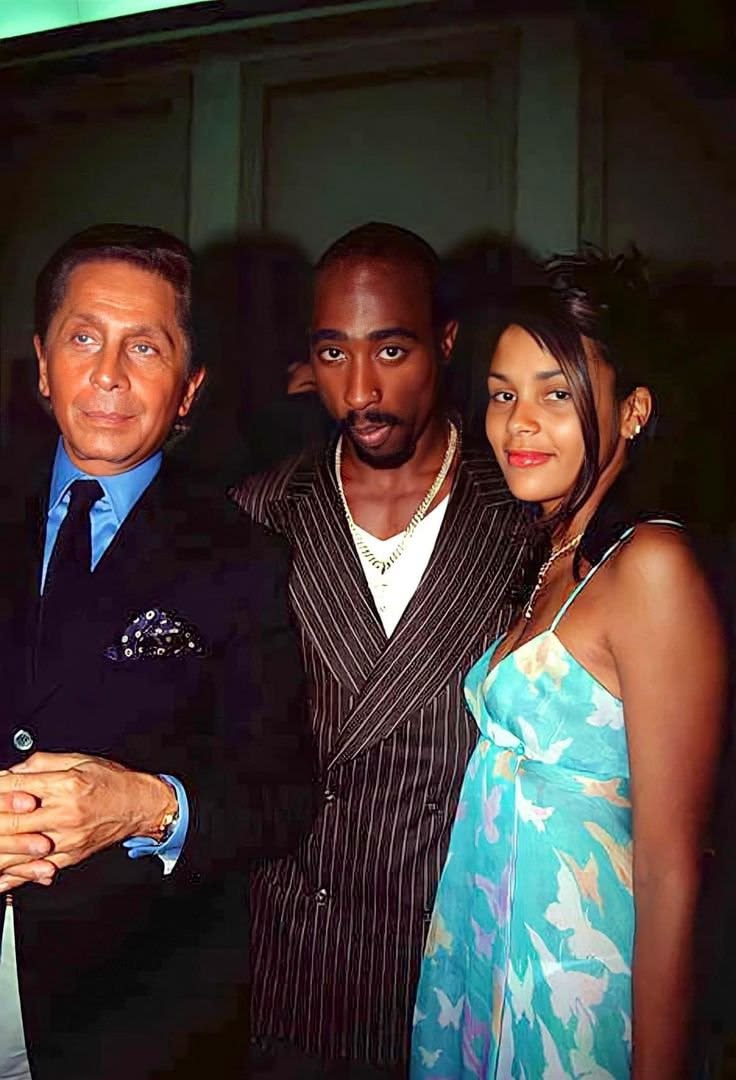
Rap culture exposed Italian fashion houses to new markets and generations of consumers, while Italian fashion contributed a European sense of artistry, tailoring, and flamboyance to hip-hop. During the 1980’s and 1990’s, artists such as Tupac Shakur helped redefine the relationship between rap and luxury fashion, wearing Versace and developing a powerful image that challenged the traditional boundaries between street culture and high fashion. His connection with Gianni Versace symbolized the emergence of the rapper as a global fashion icon, demonstrating how hip-hop artists could influence the perception and desirability of prestigious European brands. This relationship also reflected a broader cultural shift in which luxury clothing became an important element of the rapper’s identity, communicating not only wealth and social status but also creativity, confidence, and individuality. At the same time, New York rappers such as The Notorious B.I.G., Lil Kim, Nas, and Foxy Brown contributed to the internationalization of Italian designers by incorporating brands such as Dolce & Gabbana, Armani, Versace, Valentino, and Fendi into their music, personal style, and public image. Through lyrics, music videos, album covers, and public appearances, these artists transformed Italian luxury labels into symbols of success, ambition, and self expression, introducing them to audiences far beyond the traditional European fashion market. The visibility of these brands within hip-hop culture helped establish a strong connection between Italian luxury and the aspirational lifestyle associated with rap music, making designer clothing an essential part of the genre visual language.
Furthermore, the adoption of Italian fashion by rappers challenged conventional ideas about who could participate in luxury culture, as artists from urban communities used prestigious European labels to express their achievements and redefine their social identities. This exchange was mutually beneficial, while rappers gained access to the elegance and prestige associated with Italian design, fashion houses reached younger, more diverse audiences and became increasingly connected to contemporary popular culture. As a result, the relationship between Italian fashion and hip-hop evolved beyond a simple matter of clothing, becoming a significant cultural phenomenon that brought together music, identity, social mobility, and commercial influence. Through this interaction, Italian designers became an integral part of hip-hop visual identity, while rap artists helped reshape the meaning of luxury fashion for a new generation of consumers around the world.
This picture, taken by Adriana Mulassano in 1985, captures almost all the major Italian fashion legends in front of Milan’s iconic Duomo cathedral, reflecting the spirit of Italian style, creativity, and vision. From the left, we can see Laura Biagiotti, Mario Valentino, Gianni Versace, Krizia, Paola Fendi, Valentino Garavani, Gianfranco Ferré, Mila Schon, Giorgio Armani, Ottavio Missoni, Franco Moschino, and Luciano Soprani. Together, these designers helped establish Italy as a global center of luxury, innovation, and craftsmanship, creating distinctive aesthetics that would later resonate with the emerging hip-hop generation. The 1980’s and 1990’s were decisive decades in which Italian fashion achieved unprecedented international recognition, establishing Milan as one of the world’s leading fashion capitals. As American rap grew into a global cultural movement, its artists became powerful ambassadors for Italian luxury, bridging the worlds of European haute couture and American street culture. From Tupac’s iconic association with Versace to the luxury conscious imagery of New York hip-hop, this cultural exchange helped transform designer clothing into an essential element of rap identity and laid the foundations for today’s collaborations between luxury fashion houses and streetwear culture. A timeless portrait of Italian fashion at its height, representing the beginning of a legacy that continues to shape the relationship between music, style, and global luxury today.