
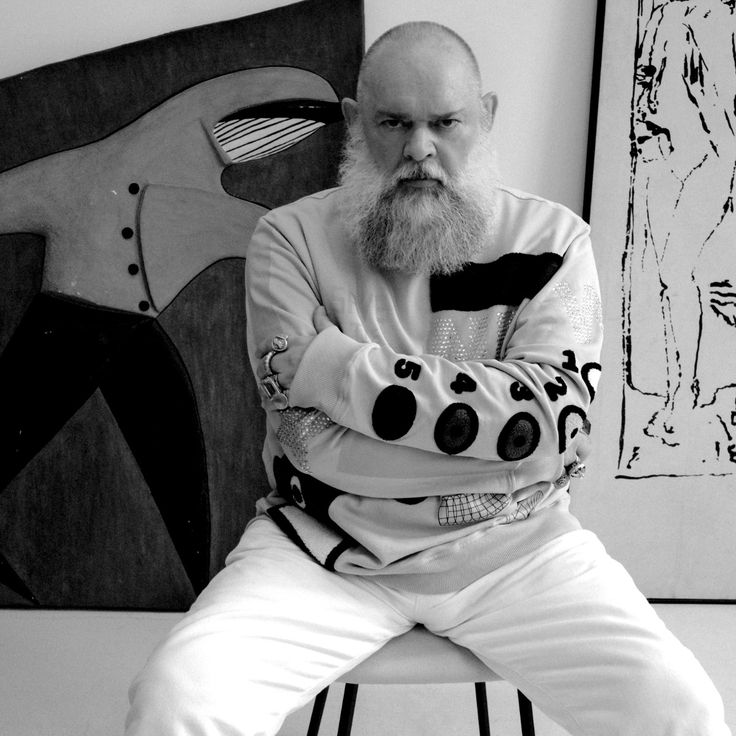
The legendary designer Walter Van Beirendonck, known as a pioneer of Belgian fashion and as a prominent member of the Antwerp Six, claimed that Virgil Abloh copied elements of his designs for Louis Vuitton’s SS21 collection, using ideas and visual concepts that had already appeared in his own collections years earlier, particularly in 2016. He publicly expressed his indignation on social media with the sentence: “I HATE COPY CATS”, making his frustration clear and bringing the debate about originality, inspiration, and appropriation in the fashion industry into the spotlight. His statement quickly attracted attention, as it raised questions about the boundaries between creative influence and the direct reproduction of another designer’s ideas. Walter Van Beirendonck’s fashion identity has always stood out for being indisputably one of the most eclectic and creative in Belgian fashion, although his work is sometimes associated with the broader Dutch and Northern European avant-garde fashion scene. As a Belgian creative director, he is especially known for his daring, out of the box collections, which express a unique and imaginative universe through flashy colours, diverse textures, exaggerated proportions, and intricate details. His designs often combine humour, surrealism, pop culture, and unconventional references, creating a distinctive visual language that challenges traditional ideas of masculinity, beauty, and luxury. Through the use of playful characters, unusual accessories, and unexpected combinations of materials, Van Beirendonck has developed a recognisable identity that has influenced generations of designers and established him as one of the most experimental figures in contemporary fashion.
Regarding his claim, critics who agreed with him pointed out several similarities between Van Beirendonck’s earlier collections and Abloh’s Louis Vuitton SS21 designs. Among the most discussed elements were plush figures attached directly to tailored garments, childlike toy characters integrated into formal menswear, and the juxtaposition of playful mascots with sophisticated luxury tailoring. These details appeared to create a visual contrast between childhood innocence and the traditional elegance associated with high fashion. For Van Beirendonck’s supporters, the resemblance was particularly striking because these playful elements were not simply decorative additions but formed an important part of the designers’ broader creative identities. They argued that the combination of colourful, cartoon-like figures and carefully constructed garments was sufficiently distinctive to raise legitimate questions about the originality of Abloh’s collection.
On the other hand, Abloh’s supporters countered that plush toys, dolls, and cartoon-inspired accessories had already appeared in fashion and popular culture long before either designer incorporated them into their work. They also argued that the specific designs, silhouettes, materials, and constructions differed, meaning that visual similarities alone were not necessarily proof of direct copying. Furthermore, Abloh’s creative approach was strongly influenced by his interest in childhood imagination, streetwear, contemporary art, and the breaking down of traditional boundaries between luxury fashion and everyday culture. From this perspective, the use of playful objects within formal menswear could be interpreted as part of a broader artistic narrative rather than a direct appropriation of Van Beirendonck’s work. The disagreement therefore highlighted a recurring dilemma in the fashion industry: determining where inspiration ends and imitation begins, particularly in a creative environment where designers constantly reinterpret existing references and visual languages. An important aspect to consider in this discussion is the concept of the 3% rule, an approach associated with Abloh’s design philosophy, which suggests that a relatively small modification to an existing object or design can transform its meaning and create something that feels new. Rather than completely reinventing a product, the designer could alter certain details, proportions, materials, or functions while retaining the recognisable structure of the original. Abloh frequently explored this idea in his work, particularly through his reinterpretation of familiar objects, established fashion codes, and existing cultural references. His approach challenged conventional definitions of originality by suggesting that creativity could emerge through the recontextualisation of something that already existed. However, it is important to note that the 3% rule is a design principle associated with his wider creative methodology, rather than a universally applied formula or a definitive explanation for every design in his collections.
In the context of the controversy surrounding the Louis Vuitton SS21 collection, this philosophy adds another layer to the debate. While Abloh’s approach was often celebrated for transforming familiar references into contemporary luxury statements, critics could interpret the limited alteration of recognisable visual elements as potentially problematic when those elements closely resembled another designer’s established work. Supporters, however, might argue that reinterpreting existing ideas is an essential part of the creative process and that originality does not always require inventing something entirely unprecedented. Ultimately, the disagreement between Walter Van Beirendonck and Virgil Abloh illustrates the complexity of authorship in fashion, where artistic influence, cultural references, and individual identity frequently overlap. It also raises a broader question about the responsibility of influential designers to acknowledge the creative work of others while developing their own distinctive visual language.