
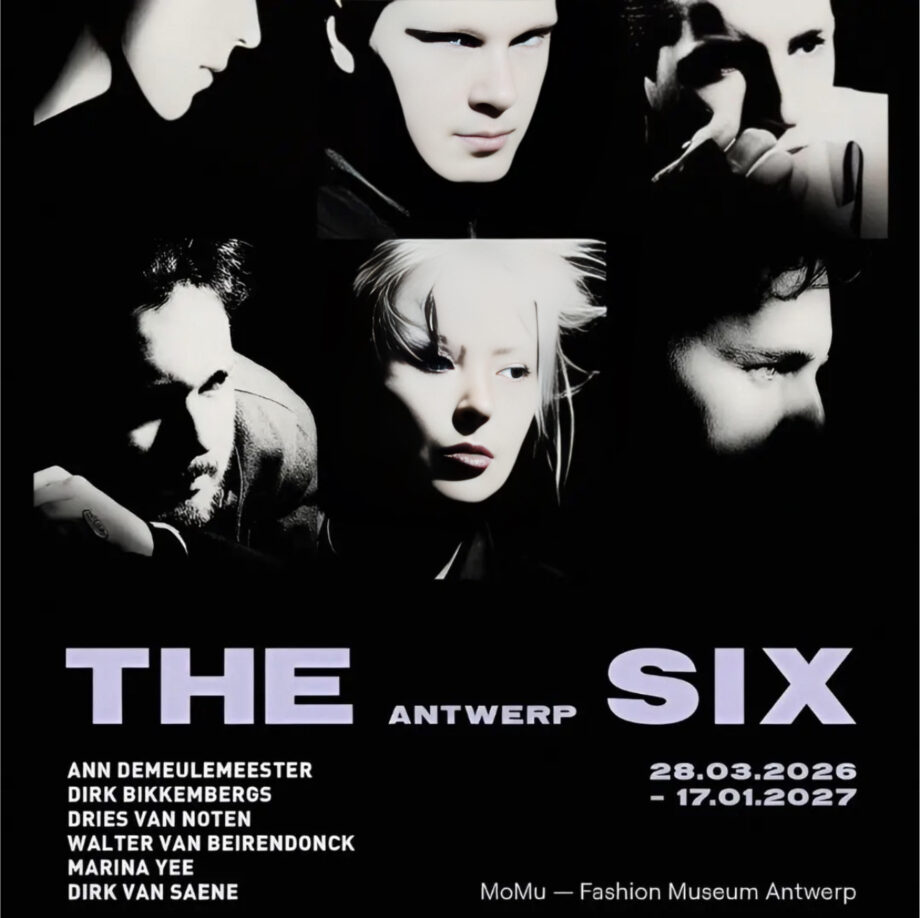
An exhibition celebrating the Antwerp Six and their successors will open at the MOMU International Museum in Antwerp since March 28, 2026, till January 17, 2027. Commemorating forty years of Belgian fashion, the exhibition will present a remarkable selection of archival pieces, celebrating the artistic vision, craftsmanship, and innovative spirit of the designers who transformed the international fashion landscape. Through their pioneering creations, these designers challenged conventional ideas of beauty, identity, and clothing, establishing a distinctive approach to fashion that continues to influence contemporary design.
The Antwerp Six Walter Van Beirendonck, Dirk Bikkembergs, Marina Yee, Dirk Van Saene, Ann Demeulemeester, and Dries Van Noten emerged as one of the most influential groups in European fashion during the 1980s and 1990s. Their international breakthrough helped establish Antwerp as a world-renowned hub of creativity, experimentation, and innovation. Although each designer developed a distinctive aesthetic and individual approach to clothing, they shared a common desire to challenge established fashion conventions and explore new forms of expression. Their work combined conceptual thinking, unconventional silhouettes, innovative materials, and a strong sense of individuality, contributing to a new understanding of fashion as an artistic and cultural practice. Their journey towards international recognition began with a pivotal presentation at a trade show in London, where their collections attracted the attention of the fashion industry. They subsequently presented their creations in Paris under their own names, bringing Belgian fashion to the forefront of the international scene. Their success was part of a broader movement that was redefining European fashion during this period. Among their contemporaries was Martin Margiela, who was then working as an assistant to Jean Paul Gaultier before establishing his own influential fashion house. Together, these designers contributed to an atmosphere of experimentation and creative independence that challenged the established hierarchy of the fashion capitals.
The influence of the Antwerp Six extended far beyond their individual collections. Their unconventional approach and determination to work outside the traditional fashion system helped generate worldwide interest in Antwerp and its creative community. Fashion journalist Suzy Menkes later acknowledged their role in shaping the style of the 1990’s, reflecting the significance of their contribution to contemporary fashion. Their success also demonstrated that innovative design could emerge from a smaller cultural centre, without relying on the established structures of Paris, Milan, or London. Antwerp gradually became synonymous with intellectual rigor, artistic freedom, and a distinctive avant-garde sensibility. Following this groundbreaking success, however, several years passed before a new generation of Belgian designers established themselves internationally with their own collections. This emerging movement further expanded the legacy of the Antwerp Six, developing new perspectives on fashion while maintaining the experimental spirit that had brought international attention to the city. Although these designers did not share a single aesthetic, their work was often characterized by conceptual depth, a strong personal vision, and a willingness to question conventional definitions of luxury, elegance, and contemporary dress.
Paradoxically, Raf Simons, who had not studied at the Antwerp Academy, became one of the leading figures of this new generation when he launched his own label in 1995. Originally trained in industrial and furniture design, Simons brought a different perspective to fashion, introducing a more conceptual and youth oriented approach that reflected changing cultural identities and attitudes. His emergence marked an important moment in the development of Belgian fashion, demonstrating that the movement initiated by the Antwerp Six could evolve beyond the boundaries of a shared educational background or a specific design tradition. Alongside Simons, a remarkable group of designers gradually gained international recognition, including Lieve Van Gorp, Wim Neels, Patrick Van Ommeslaeghe, Jurgi Persoons, Véronique Branquinho, A.F. Vandevorst, Bernhard Willhelm, Bruno Pieters, Christian Wijnants, Tim Van Steenbergen, and Haider Ackermann.
Each contributed to the growing reputation of Belgian fashion through distinctive collections that explored the relationship between clothing, the body, identity, and artistic expression. Véronique Branquinho became known for her refined yet unconventional approach to femininity, while A.F. Vandevorst developed a distinctive visual language informed by theatricality and conceptual experimentation. Bernhard Willhelm embraced a more exuberant and unconventional aesthetic, while Haider Ackermann became recognized for his sophisticated layering, sculptural silhouettes, and expressive use of colour and texture. Despite their different approaches, these designers shared a determination to create collections that went beyond seasonal trends and commercial expectations. Their work often explored the tension between tradition and innovation, structure and fluidity, restraint and extravagance. Through their experimentation with proportion, fabric, construction, and presentation, they helped reinforce the intellectual and artistic character of Antwerp fashion. Their collections demonstrated that fashion could function as a form of personal storytelling, reflecting broader cultural changes while maintaining a strong relationship with craftsmanship and material research.
This second generation consolidated Antwerp’s position as an international centre for avant garde design, extending the influence of the original six designers and opening new possibilities for those who followed. Their achievements also highlighted the importance of the Royal Academy of Fine Arts in Antwerp as a creative environment that encouraged independent thinking and unconventional approaches to design, even as the success of figures such as Raf Simons demonstrated that important new voices could emerge through different educational and professional paths.
Over the following decades, Belgian designers continued to shape the evolution of European fashion through their individual visions and experimental practices. Their contributions helped establish a lasting dialogue between fashion, art, culture, and identity, ensuring that Antwerp remained an important reference point for designers, critics, and fashion institutions worldwide. Rather than representing a single movement with a fixed aesthetic, Belgian fashion developed into a diverse and evolving landscape, united by a shared commitment to creative independence and conceptual innovation.
The exhibition at the MoMA International Museum will therefore offer an opportunity to revisit this remarkable history through archival garments and significant creations spanning four decades. By bringing together the work of the Antwerp Six and the designers who continued their legacy, the exhibition will highlight the connections between different generations while recognizing the originality of each individual contribution. It will also reflect on how a group of designers from Antwerp transformed the international perception of Belgian fashion, turning a local creative scene into a lasting force within the global industry. Forty years after their emergence, the Antwerp Six and their successors remain influential pioneers of European fashion. Their work continues to challenge conventional approaches to design, encouraging new generations to explore the possibilities of clothing as both a functional object and a form of artistic expression. Their legacy is not simply a story of international success, but a testament to the power of individuality, experimentation, and creative determination in shaping the future of fashion.